
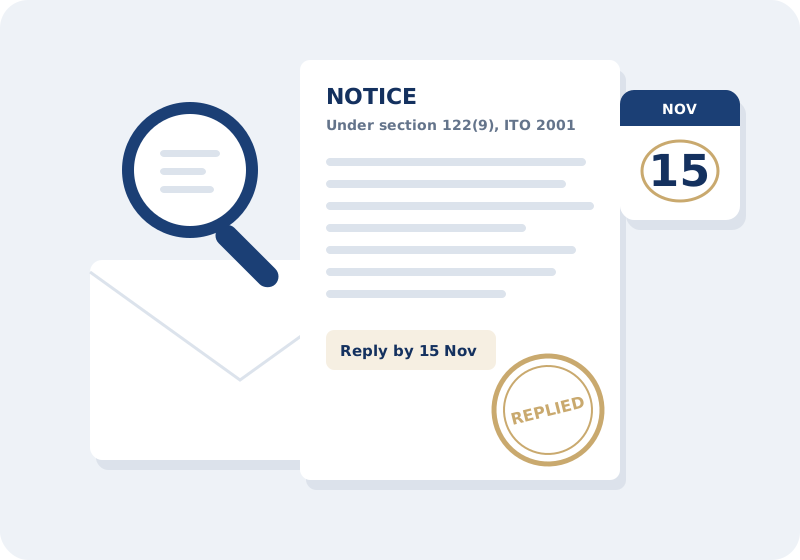
A notice from the Federal Board of Revenue is not a judgment. It is a request with a deadline. Most problems that follow a notice come from a missed date or a rushed reply, not from the underlying issue. This checklist covers what to do in the first week.
1. Find the reply date and the section
Every notice names the provision of law it is issued under and a date by which you must respond. Write both down. The section tells you what the officer is looking at. Common ones under the Income Tax Ordinance 2001 include:
- Section 114(4): a notice to file a return you have not filed.
- Section 176: a request for information or documents.
- Section 122: proceedings to amend an assessment already made.
- Section 161: proceedings for failure to deduct or deposit withholding tax.
- Section 177: selection of your case for audit.
2. Confirm the notice is genuine
Notices issued through IRIS appear in your IRIS inbox. Paper notices can be checked on the FBR document verification utility. If you cannot find a notice in IRIS, ask your advisor to check before you reply.
3. Collect exactly what is asked for
Read the notice line by line and list each item the officer requests: bank statements, sales tax returns, withholding statements, sale deeds or invoices. Gather those first. Sending large volumes of unrelated documents rarely helps and can open new questions.
4. Check the officer's data against your records
Many notices are triggered by third-party data such as bank withholding, property registrations or a buyer's sales tax annexure. Reconcile the figures in the notice with your own books. Differences are often explainable, but only if you identify them before the hearing.
5. Ask for time in writing if you need it
If the documents cannot be ready in time, file a written adjournment request before the due date, giving a reason. Do not let the date pass silently. An order passed ex parte, without your reply on record, is harder to challenge.
6. Reply on the record, with references
A good reply answers each point, attaches the supporting documents, and refers to the relevant provision of law where a legal position is taken. Keep a copy of everything you file and the acknowledgment.
7. Plan for the order
Once the officer passes an order, review it promptly. If it goes against you, the law sets a limited time to file an appeal before the Commissioner Inland Revenue (Appeals), and you may need to apply for a stay of recovery. Diary these dates the day the order arrives.
This article is general information, not advice on your case. Procedures and time limits change through Finance Acts and FBR notifications. Send us your notice for a specific review.